Berberine, Cinnamon and Chromium for Blood Sugar: What the Research Actually Shows
Quick Answer: Do These Ingredients Help Blood Sugar?
To varying and honest degrees. Berberine has the strongest human evidence of the group: randomised trials associate roughly 1,000–1,500 mg per day with meaningful reductions in fasting glucose and HbA1c. Chromium has a clearer role in normal insulin action, with the most consistent benefit in people who are deficient. Cinnamon, gymnema and banaba are studied mainly in smaller trials with modest, dose-dependent effects. None of them treats diabetes, none replaces medication, and none works overnight.
- Strongest finding: berberine lowers fasting glucose in elevated-glucose adults.
- Dose that matters: around 1,000–1,500 mg berberine/day in studies.
- Key caveat: support only — see a clinician, and never stop prescribed treatment.
Why berberine is the ingredient everyone points to
Of the botanicals that show up in blood-sugar formulas, berberine has by far the most human data. It is a plant alkaloid found in barberry and goldenseal, and its effect on glucose metabolism has been studied in dozens of randomised controlled trials. Pooled analyses have associated it with lower fasting blood glucose and lower HbA1c in people with type 2 diabetes or prediabetes, sometimes to a degree that surprised researchers by rivalling older oral drugs. The largest pooled analysis to date, a 2022 Frontiers in Pharmacology meta-analysis of 37 randomised trials in 3,048 patients, reported reductions in fasting glucose, HbA1c and two-hour glucose. We go through that evidence in our guide to berberine supplement benefits for blood sugar.
Two honest caveats come with that. First, dose: the studied amount is high — commonly 500 mg taken two or three times daily — and many products contain far less, which changes what you can expect. Second, potency cuts both ways: because berberine genuinely affects blood sugar, it can interact with glucose-lowering medication and cause hypoglycaemia if stacked on top of it. That is a medical conversation, not a self-experiment. The best-known single trial, Yin et al. in Metabolism (2008), used 500 mg three times a day — the split, with-meals pattern most later studies copied.
Chromium: a smaller, steadier story
Chromium is an essential trace mineral involved in the action of insulin. The clearest benefit from supplementation shows up in people who are actually chromium-deficient; in the general population the effect is smaller and less consistent across trials. It is a reasonable supporting ingredient with a good safety record, but it is not the heavy hitter of a blood-sugar formula. The NIH Office of Dietary Supplements chromium fact sheet sets out the same conclusion, and our deep-dive on chromium for blood sugar walks through the dose.
What the evidence supports, in one table
| Ingredient | What the research supports |
|---|---|
| Berberine | Lowers fasting glucose and HbA1c in elevated-glucose adults; drug interactions matter |
| Chromium | Supports normal insulin action; clearest benefit if deficient |
| Cinnamon | Mixed data; small, dose-dependent effect at best |
| Gymnema sylvestre | Small trials for sugar cravings and post-meal glucose; promising, not conclusive |
| Banaba (corosolic acid) | Limited human data; doses vary widely |
Cinnamon: the ingredient whose dose rarely survives the capsule
Cinnamon has a real but modest effect on fasting glucose, and the amount used in the trials is the detail that decides whether a product can reproduce it. A 2024 updated systematic review with a dose-response meta-analysis found cinnamon supplementation associated with improved glycaemic control in type 2 diabetes; an earlier 2013 meta-analysis in Annals of Family Medicine was more cautious about whether the change was clinically meaningful; and a 2006 randomised trial in postmenopausal women found no improvement at all. All three are honest readings of the same uneven literature.
What unifies the positive trials is the quantity. They generally used between 1 and 6 grams of cinnamon a day, usually for around 40 days. Most supplements print cinnamon in milligrams, commonly 50 to 500 mg, which is a tenth to a sixtieth of a studied amount. That is not necessarily dishonest — several grams of cinnamon will not fit into a capsule alongside anything else — but a cinnamon figure written in milligrams should be read as a flavour note, not as the research. The type matters too. Cassia cinnamon, the cheap and common kind, carries far more coumarin than Ceylon, and coumarin at sustained high intakes is a liver concern, so a label that never names the cinnamon species has withheld the fact you would need to judge it.
Gymnema, banaba and the second tier of blood-sugar botanicals
Below berberine and chromium sits a group of botanicals with genuine but thinner evidence, and gymnema is the most interesting. Gymnema sylvestre has been studied in a 2023 systematic review and meta-analysis covering glycaemic control, lipids and blood pressure in adults, and it has a second, more unusual line of research: gymnemic acids temporarily blunt the perception of sweetness on the tongue, which is why it turns up in formulas aimed at sugar cravings rather than at fasting glucose alone. The trials are small and the effect sizes are not settled, so “promising and worth watching” is the fair description, not “proven”.
Banaba leaf, standardised for corosolic acid, is thinner still: a handful of small human studies, doses that vary widely between products, and no pooled analysis solid enough to build a claim on. Bitter melon and fenugreek occupy similar territory. The practical rule is that a second-tier botanical is a bonus on top of a well-dosed anchor ingredient, never the anchor itself — and a long list of supporting botanicals does not compensate for an anchor that is missing or under-dosed.
The three headline ingredients compared on dose
| Ingredient | Amount used in studies | What a typical label shows |
|---|---|---|
| Berberine | About 1,000–1,500 mg a day, split 500 mg two or three times with meals | Often 200–500 mg once daily — below the studied total |
| Chromium | Microgram amounts; adequate-intake territory rather than a pharmacological dose | Usually a stated microgram figure with a % Daily Value |
| Cinnamon | About 1–6 grams a day over roughly 40 days | Commonly 50–500 mg — a fraction of a gram |
Read across that table and the pattern is that only chromium routinely appears at something like its studied amount, because micrograms fit anywhere. Berberine usually lands short, and cinnamon usually lands far short. If you want the head-to-head on the first and third rows, our comparison of berberine vs cinnamon for blood sugar sets the two bodies of evidence directly against each other.
Four mistakes people make reading a berberine, cinnamon and chromium label
Assuming a named ingredient is a dosed ingredient. An ingredient printed on the front of the box tells you it is present. It tells you nothing about how much, and in this category the amount is usually the whole question. A proprietary blend that lists berberine, cinnamon and chromium under one combined milligram total has told you the sum and hidden every part of it.
Reading milligrams and grams as if they were the same scale. Berberine is studied in hundreds of milligrams and cinnamon in whole grams, so an identical milligram figure means a sensible berberine dose and a token cinnamon one. Comparing the two numbers side by side without converting is the most common arithmetic slip on a supplement panel.
Expecting the combination to be additive. There is no reliable trial evidence that berberine, cinnamon and chromium together outperform berberine alone. Three separate bodies of single-ingredient research do not add up to evidence for the stack, and stacking them usually means less of each.
Treating ingredient evidence as product evidence. The trials tested ingredients at defined doses in defined populations, not the finished bottle in your hand, which may use a different form, amount and combination. Closing that gap is a matter of comparing the panel with the studies — the method we set out in our guide to reading doses on a supplement label.
Where the evidence stops
Two limitations are worth stating plainly. First, a finished multi-ingredient product and a single studied dose are different things — the ingredients can have evidence while the specific product has never been trialled. Always check a label's milligram amounts against what the studies actually used, because for several of these botanicals the dose is what decides whether there is any effect at all. Second, none of this treats diabetes. Blood-sugar management is a medical matter, and these ingredients are studied as support alongside diet, activity and, where prescribed, medication — not as a replacement for any of them. NCCIH says the same thing in its overview of diabetes and dietary supplements. Checking the milligram column is a skill in itself, and our guide to reading doses on a supplement label sets out the method.
Related reading
Medical note: this article is general reading, not personal medical advice. Speak to a healthcare professional before starting any supplement, especially if you take insulin or other glucose-lowering medication — berberine in particular can interact with them and lower blood sugar.
Scientific references
- PubMed 37818728 — Moridpour et al., “The effect of cinnamon supplementation on glycemic control in patients with type 2 diabetes mellitus: An updated systematic review and dose-response meta-analysis of randomized controlled trials” (Phytother Res, 2024)
- PubMed 24019277 — Allen et al., “Cinnamon use in type 2 diabetes: an updated systematic review and meta-analysis” (Ann Fam Med, 2013)
- PubMed 16549460 — Vanschoonbeek et al., “Cinnamon supplementation does not improve glycemic control in postmenopausal type 2 diabetes patients” (J Nutr, 2006)
- PubMed 32730903 — Asbaghi et al., “Effects of chromium supplementation on glycemic control in patients with type 2 diabetes: a systematic review and meta-analysis of randomized controlled trials” (Pharmacol Res, 2020)
- PubMed 36580574 — Zamani et al., “The effects of Gymnema Sylvestre supplementation on lipid profile, glycemic control, blood pressure, and anthropometric indices in adults: A systematic review and meta-analysis” (Phytother Res, 2023)
- NIH NCCIH — Diabetes and Dietary Supplements: What You Need To Know
- NIH NCCIH — Berberine: What You Need To Know
- NIH Office of Dietary Supplements — Chromium Fact Sheet
- PubMed 34956436 — Guo et al., “The Effect of Berberine on Metabolic Profiles in Type 2 Diabetic Patients: A Systematic Review and Meta-Analysis of Randomized Controlled Trials” (Oxid Med Cell Longev, 2021)
- American Diabetes Association — Standards of Care in Diabetes
Frequently asked questions
Does berberine actually lower blood sugar?
In trials, yes, to a meaningful degree in people with elevated blood sugar. Multiple randomised studies and meta-analyses associate berberine with reductions in fasting glucose and HbA1c, in some cases comparable to older glucose-lowering drugs. Because of that potency it can interact with medication and push blood sugar too low, so it should not be combined with prescribed treatment without medical advice.
How much berberine is used in studies?
Trials commonly use around 500 mg two or three times a day, for a total near 1,000 to 1,500 mg daily, taken with meals. Products vary widely and many list a smaller amount, so the figure on the label is worth checking against the studied dose.
Does cinnamon really help blood sugar?
The evidence is mixed and the effect, where present, is modest and dose-dependent. Some trials show small reductions in fasting glucose; others show little. It is best viewed as a supporting ingredient, not a decisive one.
Can a supplement replace diabetes medication?
No. Blood-sugar supplements are studied for support, not as a treatment for diabetes, and none is a substitute for prescribed medication. If you have diabetes, work with your clinician and never stop or change treatment on your own.
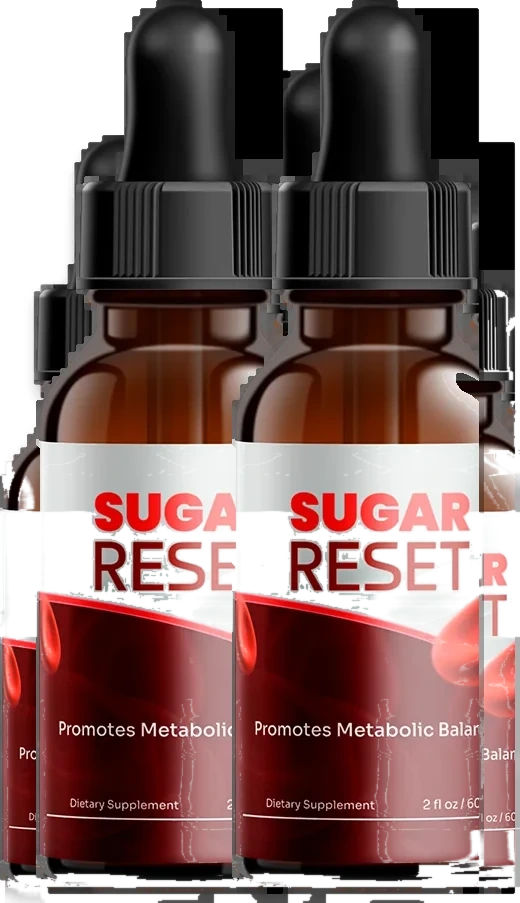
See how SugarReset compares against this evidence
SugarReset is a daily liquid built on chromium picolinate with gymnema, African mango, green tea, maca and Panax ginseng inside a 200 mg proprietary blend. It carries no berberine and no cinnamon — our full SugarReset breakdown reads its panel against the evidence above.
Check Availability & Options