Glucose-Lowering Supplements Compared (2026): What the Evidence Actually Supports
Quick Answer: Which glucose-lowering supplements are worth it in 2026?
Among glucose-lowering supplements, berberine and chromium carry the strongest human evidence, cinnamon is modest, and most trending single ingredients remain weakly supported. Grade options by trial size, the dose actually used, and consistency across studies. Treat any supplement as support for healthy glucose metabolism alongside diet, activity and medical care, never a replacement.
- Strongest evidence: berberine, then chromium at a disclosed dose.
- Modest and mixed: cinnamon; weak: many trendy single ingredients.
- Non-negotiable: supplements complement diet, activity and medical care — they don't replace medication.
If you have spent any time searching for glucose-lowering supplements, you already know the problem: every product claims to be the breakthrough, and none of them shows you the homework. This comparison does the opposite. We graded the leading glucose-support ingredients head to head, ranked them by the quality of their human evidence rather than the volume of their marketing, and drew a clear line between what is genuinely well supported and what is riding a trend. The short version is that a small number of ingredients earn their place and the rest are along for the ride.
Grading matters because "studied" is not a yes-or-no fact. An ingredient can be technically studied and still rest on three tiny trials that used a dose no commercial product contains. So we scored each candidate on three axes: how large and well-designed the trials were, whether those trials used the dose a real bottle actually delivers, and whether independent researchers found the same thing more than once. Consistency is the tie-breaker, because a single flattering study is easy to find for almost anything.
How we compared the leading glucose-lowering supplements
Before naming winners, it is worth being explicit about the scorecard, because a comparison is only as honest as its criteria. We used three, and we weighted them in this order.
Trial size and design. A randomised, placebo-controlled trial of two hundred people tells you far more than an open-label observation of twenty. Larger, blinded studies are harder to fool with chance, placebo response and wishful measurement. Where an ingredient has been pooled into a meta-analysis of several such trials, that carries the most weight of all.
Dose match. This is the criterion marketing most often hides. If the human benefit appeared at 1,000–1,500 mg per day and the capsule in front of you contains 100 mg, the study is not evidence for that product. The gap between the researched dose and the shipped dose is where most disappointment lives.
Consistency. Does the effect show up repeatedly, in different populations, run by different teams? Or is it one striking result that nobody has managed to reproduce? An ingredient that works modestly but reliably is more trustworthy than one that works spectacularly once.
Run every popular glucose-lowering ingredient through that filter and the field sorts itself quickly into tiers. Here is how the leaders land.
| Ingredient | Evidence grade | Typical studied dose | What the trials suggest |
|---|---|---|---|
| Berberine | A− (strongest) | ~900–1,500 mg/day, split with meals | Meaningful reductions in fasting glucose and HbA1c across multiple randomised trials |
| Chromium | B (solid, smaller) | ~200–1,000 mcg/day | Small but fairly consistent improvements, clearest where intake is low |
| Cinnamon | C+ (modest, mixed) | ~1–6 g/day (Ceylon vs cassia differs) | Some fasting-glucose benefit in parts of the literature; inconsistent overall |
| Alpha-lipoic acid | C (mixed) | ~600 mg/day | More studied for nerve comfort than for glucose control itself |
| Gymnema, banaba, bitter melon | C to C− (early) | Varies widely by extract | Plausible mechanisms, mostly small or short human studies |
| Most "trending" single herbs | D (weak) | Often undisclosed | Anecdote and mechanism outrun the human trial data |
Berberine: the strongest single ingredient
If the category has a headline act, it is berberine. It is the one ingredient where the human trial data are both reasonably large and reasonably consistent, with several randomised studies and pooled analyses pointing the same direction: measurable reductions in fasting blood glucose and in HbA1c, the three-month average that clinicians actually watch. The proposed mechanism — activation of an energy-sensing enzyme called AMPK — is biologically coherent and lines up with what the numbers show. The anchor for that grade is the 2022 Frontiers in Pharmacology meta-analysis of 37 randomised trials in 3,048 patients, which reported reductions in fasting glucose, HbA1c and two-hour glucose.
Two honest caveats keep berberine from an outright "A". First, dose and timing are demanding: the studied benefit appears around 900–1,500 mg a day, split across meals, because a single large dose is poorly absorbed and hard on the stomach. Second, gastrointestinal upset is common at the top of that range. None of this makes berberine a miracle, but it does make it the ingredient most deserving of the top slot in any glucose-lowering supplements comparison.
See how the top-graded ingredients come together
Rather than buy six single-ingredient bottles, many people want several supported ingredients in one place — and then have to check what the panel actually discloses. The official SugarReset page lists its full formula, its 200 mg proprietary blend, the bundle options and the returns policy.
View the Official SugarReset PageChromium: small effect, reassuringly consistent
Chromium is the quiet runner-up. It is an essential trace mineral involved in how insulin does its job, and supplementation has shown small but fairly reproducible improvements in glucose markers, particularly in people whose dietary intake was low to begin with. The effect size is modest — nobody should expect chromium alone to transform a reading — but "modest and consistent" is exactly the profile a careful buyer should respect. If you want the detail, our breakdown of chromium's evidence and effective dose for blood sugar walks through the trial numbers and the sensible dose range. The honest caveat is that chromium also has clear null results — a 2007 Diabetes Care randomised trial found no effect in a Western population — and the NIH chromium fact sheet treats the evidence as mixed.
Chromium also illustrates why a good formula uses it. It is inexpensive, well tolerated at typical doses, and complements rather than duplicates berberine's mechanism. That combination — meaningful primary actor plus a well-tolerated supporting mineral — is the logic behind most credible multi-ingredient products.
Cinnamon: modest, mixed, and dependent on which cinnamon
Cinnamon is the ingredient most likely to be over-sold. Parts of the literature show a fasting-glucose benefit, other parts show nothing, and much of the variation comes down to type and dose. Cassia cinnamon, the common grocery variety, contains coumarin that is best not consumed in large daily amounts, while Ceylon cinnamon is gentler but less studied. The fair grade is "modest and inconsistent" — worth including in a blend for its supporting role, not worth building a purchase around. If cinnamon is your main interest, the nuance is covered in our guide to cinnamon's blood-sugar benefits and the dosage that actually matters. A 2024 dose-response meta-analysis in Phytotherapy Research is the current best summary of cinnamon and glycaemic control, and it is where the “modest and inconsistent” reading comes from. Because cinnamon and berberine are so often compared directly by shoppers, we have also written up how the two ingredients compare on dose, effect size and safety.
The trendy long tail: interesting mechanisms, thin human data
Beyond the leaders sits a long tail of ingredients that the internet cycles through every year: gymnema, banaba (and its corosolic acid), bitter melon, alpha-lipoic acid, fenugreek, and a rotating cast of "newly discovered" botanicals. Most share a pattern. The mechanism is plausible, the test-tube or animal data are encouraging, and the human trials are small, short, or few. That does not make them useless — several have a legitimate supporting role — but it does mean none of them belongs at the top of an evidence-graded list, and any product that leads with one of them as its hero ingredient is leaning on hope more than data. Vitamin D sits in a different category again — a nutrient rather than a botanical — and we cover vitamin D and blood sugar in prediabetes separately.
Alpha-lipoic acid deserves a specific note because it is frequently mislabelled. Its better evidence is for nerve comfort in people with diabetic neuropathy, not for lowering glucose itself. Including it in a blood-sugar formula is defensible; presenting it as a glucose-lowering powerhouse is not.
Single ingredient versus combination formula
This is where buyers get the most confused, and where marketing is the least honest. The instinct is that "more ingredients" equals "more powerful." The reality is that a capsule or a dropper holds a fixed volume, and every additional name on the label competes for the same finite space. A product boasting twenty-four botanicals is almost certainly delivering many of them at doses far below anything that was ever studied — a practice the industry politely calls "fairy dusting." The two ingredients buyers most often weigh against each other get a dedicated head-to-head in berberine versus cinnamon for blood sugar.
The honest framing is this. A combination formula is the right idea when, and only when, its ingredients are present at doses close to what the trials used. The advantage of a combination is mechanistic: berberine's AMPK pathway and chromium's insulin-cofactor role are complementary, not redundant, so pairing them can cover more ground than either alone. The failure mode of a combination is dilution: a long, impressive list where nothing reaches a meaningful amount. This is why label literacy beats ingredient-counting, and why it is worth learning how to read the doses on a blood-sugar supplement label before you spend a cent.
Judged that way, the multi-ingredient liquid we cover on this site, SugarReset, is built around the logic this comparison rewards: a shorter list led by the better-supported ingredients, in a liquid serving that discloses its amounts, rather than a marketing-driven count of names. It deserves the same scrutiny as everything else here — read its panel and check the doses against the studied ranges above.
The best glucose-lowering supplement is not the one with the longest ingredient list. It is the one whose few, well-chosen ingredients appear at doses a study would recognise — and whose label lets you verify it.
What glucose-lowering supplements cannot do
An honest comparison has to mark its own limits. None of these ingredients, at any grade, is a substitute for medication or for medical care. They are intended to support healthy glucose metabolism alongside a sensible diet, regular movement and whatever treatment plan your clinician manages. Their effects, where real, are supportive and gradual — measured over weeks and months, not overnight. NCCIH’s overview of diabetes and dietary supplements states the same limit.
There is also a genuine safety point that applies most to the top of this list. Berberine can lower blood sugar further on top of glucose-lowering drugs, which is a benefit and a risk depending on your situation, and it can interact with several medications. That is precisely why the strongest ingredient is also the one that most requires a conversation with a professional before you start. If a product implies it can reverse, cure or replace treatment, it has failed the most basic honesty test — and honesty, more than novelty, is what should decide your shortlist. For the wider question of which brands earn trust, see the quality signals that separate credible supplement brands from the rest.
Medical note: this article is general reading, not personal medical advice. Speak to a healthcare professional before starting any supplement, especially if you take insulin or other glucose-lowering medication, or manage an existing health condition.
Frequently asked questions
Which glucose-lowering supplement is best supported?
Berberine and chromium have the most consistent human evidence in this category. Berberine shows the largest effects on fasting glucose and HbA1c across multiple trials, while chromium offers smaller but reliable benefits, particularly where dietary intake is low. Cinnamon is modest and mixed, and most trendier single ingredients rest on small or short studies. No supplement matches medication, and results vary by person, dose and starting point.
How should I compare blood sugar supplements?
Grade each ingredient on three things: trial size, whether the studies used the same dose the product actually delivers, and how consistent the results are across independent trials. An ingredient backed by several larger randomised trials at a disclosed, matching dose outranks one supported by a single small study. Then read the supplement facts panel to confirm the product truly contains that dose rather than a token trace.
Are single or combination formulas more effective?
It depends on execution. A combination can cover several mechanisms at once, but only if each ingredient is present at a dose near what trials used. Many multi-ingredient products spread a fixed capsule volume too thin, listing impressive names at token amounts. A focused formula with fewer ingredients at meaningful doses usually beats a long list of underdosed ones.
Do these supplements replace medication?
No. Glucose-lowering supplements are intended to support healthy glucose metabolism alongside diet and activity, not to replace prescribed medication or medical care. Several ingredients, berberine especially, can interact with diabetes drugs and lower blood sugar further, so never stop or adjust medication on your own. Any change belongs in a conversation with the clinician who manages your treatment.
Related reading
- Chromium for blood sugar: the evidence and the effective dose
- Cinnamon and blood sugar: benefits and the dosage that matters
- Blood sugar management supplements: a practical buyer's guide
- Blood sugar supplement brands: quality signals that actually matter
Scientific references
- NIH NCCIH — Diabetes and Dietary Supplements
- NIH Office of Dietary Supplements — Chromium Fact Sheet
- PubMed 34956436 — Guo et al., “The Effect of Berberine on Metabolic Profiles in Type 2 Diabetic Patients: A Systematic Review and Meta-Analysis of Randomized Controlled Trials” (Oxid Med Cell Longev, 2021)
- PubMed 24019277 — Allen et al., “Cinnamon use in type 2 diabetes: an updated systematic review and meta-analysis” (Ann Fam Med, 2013)
- Mayo Clinic — Diabetes treatment: supplements and lifestyle
- American Diabetes Association — Food and nutrition
Put the top-graded ingredients on your shortlist
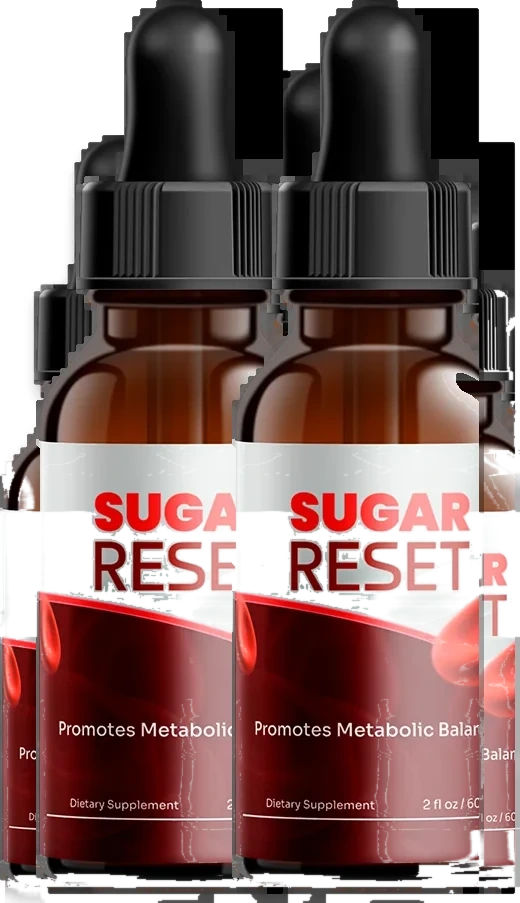
SugarReset leads with chromium and gymnema from this comparison, keeps the rest of its botanicals inside a 200 mg proprietary blend, and writes its returns terms out in full. If you want to see the bundle options and buy directly from the official store, they are listed there.
See SugarReset Options