The Best Blood Sugar Supplement Is Decided in the Milligram Column
Quick Answer: How Do You Judge a Blood Sugar Supplement by Its Label?
The best blood sugar supplement, judged honestly, is the one whose label names every active ingredient and prints a milligram amount close to what human trials actually used. Ingredient names sell the bottle; the milligram column decides whether the research behind those names has anything to do with what is inside it. Anything folded into a “proprietary blend” cannot be checked against the evidence at all, because the individual amounts are never disclosed.
- Look for: ingredient name + exact mg + extract ratio or standardisation percentage.
- Red flag: a long list of botanicals pooled under one blend total.
- Reality check: a well-studied ingredient at an unstudied dose is a marketing claim, not a finding.
Why the milligram column tells you more than the ingredient list
Most blood-sugar formulas are sold on their ingredient list. Berberine, cinnamon, gymnema, banaba, bitter melon, chromium — the same familiar names, shuffled into a slightly different order on every bottle. Read enough labels and you start to notice that the list is almost never what separates one product from another. What separates them, quietly, is the number printed next to each name.
That number carries the entire argument. Nearly every botanical studied for glucose metabolism shows some kind of dose relationship: below a threshold, trials find nothing worth reporting; at or above the amount that was actually tested, some trials find a measurable change and others still do not. An ingredient with reasonable human evidence at around a gram a day has no evidence whatsoever at fifty milligrams. Same plant, same compound, same claim on the front of the box — and a completely different expectation. Berberine is the clearest case: the 2022 meta-analysis of 37 randomised trials that anchors its reputation used gram-level daily amounts, not the fractions many labels print.
So when shoppers ask which is the best blood sugar supplement on the market, the version of that question that can actually be answered is narrower: which label lists amounts that resemble the amounts used in published human research? You can settle that yourself, in the supplement facts panel, in about ninety seconds. The broader question — which brand is best overall — has no answer anyone can verify, and any page that claims otherwise is guessing on your behalf.
What a studied dose looks like, ingredient by ingredient
Below is a rough map of the amounts that show up in human trials of the ingredients most often used in blood-sugar formulas, next to the amounts that commonly appear on retail labels. It is a comparison of orders of magnitude, not a prescription, and the ranges are wide because the studies themselves vary in design, duration and population.
| Ingredient | Typical amount used in human trials | What retail labels often carry | Strength of the human evidence |
|---|---|---|---|
| Berberine | About 1,000–1,500 mg daily, usually split across meals | Frequently 100–500 mg total per day | Strongest of the group; several randomised trials and pooled analyses |
| Chromium (as picolinate or similar) | Roughly 200–1,000 mcg daily | Often within range, since the amount is small | Moderate; clearest where intake is low to begin with |
| Cinnamon (whole bark powder) | Around 1–6 g daily in most trials | Commonly 50–500 mg, far below trial doses | Mixed and inconsistent; small effects at best |
| Gymnema sylvestre extract | Roughly 200–400 mg of standardised extract, sometimes more | Varies enormously; standardisation often unstated | Limited; small trials, promising but not settled |
| Banaba leaf (corosolic acid) | Small milligram amounts of the standardised acid | Leaf powder listed without a corosolic acid percentage | Thin; few human trials, short duration |
| Bitter melon | Gram-level amounts of fruit or extract | Usually a token inclusion | Weak and conflicting across trials |
Two things fall out of that table immediately. First, the gap between studied dose and shelf dose is widest exactly where the marketing is loudest — cinnamon is on the front of hundreds of boxes at amounts an order of magnitude below what the trials used. Second, the ingredients where labels usually do reach the studied range are the cheap, small-dose minerals like chromium, not the expensive botanicals. That is not a coincidence. The cinnamon figure comes from Khan et al. in Diabetes Care (2003), which used 1 to 6 grams a day — the gap explored in our guide to cinnamon dosage for blood sugar. Chromium is the opposite case, and our chromium deep-dive explains why its label amount usually does match the studied one.
Extract ratios and standardisation: when 500 mg is not 500 mg
Here is the subtlety that trips up almost everyone comparing two bottles side by side. A milligram figure describes the weight of the material in the capsule. It does not describe how much of the active compound that material contains. Two products can both print “500 mg gymnema leaf extract” and deliver wildly different amounts of the compound that the research was actually about.
There are two label conventions that close this gap, and a good label uses at least one of them. The first is an extract ratio, written as something like 10:1, meaning ten parts raw plant were concentrated into one part extract. The second, and the more useful, is a standardisation percentage: “standardised to 25% gymnemic acids” or “standardised to 97% berberine HCl”. That percentage is the only way to work out what you are actually getting. Five hundred milligrams of an extract standardised to 25% delivers 125 mg of the marker compound; five hundred milligrams of unstandardised leaf powder delivers an unknown amount, possibly close to nothing.
When a label prints a big milligram number with no ratio and no percentage, that is not necessarily dishonest — plenty of legitimate products list whole herb powders that way. But it does mean the number cannot be compared with a trial dose, and it should not be treated as if it can.
A supplement label is a claim about contents, not a claim about effect. The most it can honestly tell you is whether the product is in the same numerical neighbourhood as the research it borrows credibility from.
See a label that prints its numbers
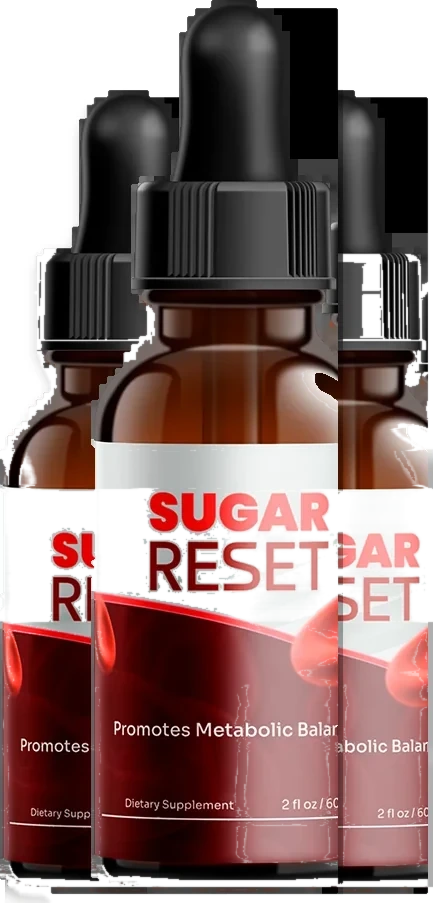
Practise the milligram-column check on a real panel. SugarReset states an amount for chromium picolinate and places the rest of its botanicals inside a 200 mg proprietary blend, which is precisely the label pattern this article teaches you to read. The panel is laid out in full on the official page, along with current bundle options and the guarantee terms.
Check Availability & OptionsProprietary blends and the one number they hide
A proprietary blend is a legal way of grouping several ingredients under a single total weight. The label lists the names, in descending order of quantity, and then one figure — say 850 mg — covering all of them together. Nothing about that is against the rules, and manufacturers defend it as protection against copycats.
The practical consequence is that you lose the only piece of information that matters. If eight botanicals share 850 mg, the first one on the list might be 700 mg and the rest a dusting, or it might be an even split leaving every ingredient far below its studied dose. From outside the company, those two products are indistinguishable. Descending-order listing helps a little: you at least know which ingredient dominates. It tells you nothing about by how much.
There is one honest use for a blend. Where a handful of ingredients are included for flavour, texture or as a small supporting cast, pooling them costs you nothing. The problem is when the blend contains the headline ingredient — the one on the front of the box, the one the whole product is sold on. When that happens, the label has given you a name and withheld the number, and the correct response is to treat the product as unverifiable rather than to assume the best.
What separates the best blood sugar supplement from the rest of the shelf
Strip away the packaging and there are only four things a shopper can actually check before buying. Every one of them lives on the label or the product page, and every one of them is binary enough to sort products quickly.
One: full disclosure. Every active ingredient carries its own milligram figure. No blends covering the headline botanicals.
Two: doses in the right neighbourhood. At least the primary ingredients land somewhere near the amounts used in human trials, rather than an order of magnitude below.
Three: standardisation stated. Extracts carry a ratio or a marker-compound percentage, so the milligram figure means something specific.
Four: serving arithmetic that adds up. The amounts shown are per serving, the serving size is stated, and the container actually holds the number of servings the daily instructions imply.
A product that clears all four is not proven to work. It is simply a product whose claims can be checked, which puts it ahead of most of the top blood sugar supplements you will meet in a search result. Anything that fails two or more can be set aside without further thought, and that alone removes a great deal of noise from the decision.

Serving size, servings per container and the timing question
The supplement facts panel reports everything per serving, and the serving is whatever the manufacturer decides it is. Two capsules, one dropperful, one scoop. This is where a label can be technically accurate and still create a misleading impression, because a generous per-serving figure paired with a two-capsule serving means you are consuming the container twice as fast as you assumed.
The arithmetic worth doing takes ten seconds. Multiply the serving size by the number of servings the directions call for each day, then divide the container count by that figure. If the bottle says sixty capsules, the serving is two capsules, and the directions say twice daily, you have a fifteen-day supply, not a month. Comparing two products without doing that division is how people end up comparing an eight-week supply against a two-week one.
Timing is the other question the panel quietly answers. People search for when is the best time to take blood sugar supplement far more often than they search for dosing, and the label usually already knows, because the directions tend to mirror the protocol the ingredients were studied under. Botanicals aimed at the post-meal response were generally trialled just before or with food, and larger daily amounts were typically split across two or three meals rather than swallowed in one go. If the directions say “with meals”, that is not filler text — it is the study design showing through.
Liquid, capsule or gummy: what the form does to the label
Form is not a detail; it constrains what the label can carry. A capsule holds a fixed volume of powder, which is why a formula with twenty botanicals almost inevitably carries token amounts of most of them. There is simply nowhere for the milligrams to go. That is the single strongest argument for a shorter ingredient list: fewer names competing for the same space means each one can be present in a meaningful amount.
Liquids and tinctures escape the volume problem but introduce a measurement one. The serving is a dropperful or a millilitre count, and how accurately you hit that depends on how you use the dropper. On the other hand, liquid formats can carry botanical extracts that would need several capsules, and they let a manufacturer print per-dropper amounts that are easy to compare.
Gummies are the format where dose and marketing diverge most sharply. Sugar, pectin and flavouring occupy most of the mass, leaving very little room for actives, and a gummy aimed at glucose metabolism that carries its own sugar load is a genuine tension worth noticing. Some are formulated carefully. Many are confectionery with a supplement facts panel attached. The label, again, is where the difference shows.
Whichever format you land on, the ingredient evidence itself is worth reading separately from the packaging. Our breakdown of what the research shows for berberine, cinnamon and chromium covers where each of those trials is strong and where it thins out, which is the other half of the same decision. SugarReset is the liquid formula we cover on this site, and its panel is worth putting through the same four checks as anything else on your shortlist.
What a label cannot tell you
Everything above is a filter, not a verdict, and it is worth being blunt about the limits. A supplement facts panel is a declaration of contents. It is not evidence that the contents do anything, and there are at least four things it will never tell you.
It cannot tell you that the finished product was tested. Individual ingredients accumulate evidence; multi-ingredient formulas almost never get trialled as sold. A blend of six well-studied botanicals is not six times as supported as one — it is an untested combination of supported parts, and the honest phrasing for that is “plausible”, not “proven”.
It cannot confirm what is actually in the capsule. Independent testing across the botanical supplement category has repeatedly turned up products whose contents diverge from their labels, which is why third-party verification and certificates of analysis matter. A label is a claim; a test is a check. This is documented rather than alleged: a 2020 review of DNA-based authentication of dietary supplements surveys how often botanical products fail identity testing.
It cannot predict your response. Trials report averages, and averages hide the people who saw nothing at all. Baseline glucose, diet, activity, sleep, medication and body weight all move the result, and none of that is on the box.
And it cannot say anything about disease. These are dietary supplements studied as support for normal glucose metabolism alongside diet and activity. Blood sugar management is a clinical matter, no supplement is a substitute for prescribed medication, and the ingredients with the strongest effects are exactly the ones most likely to interact with it. NCCIH’s overview of diabetes and dietary supplements says the same.
Medical note: this article is general reading, not personal medical advice. Speak to a healthcare professional before starting any supplement, especially if you take insulin or other glucose-lowering medication — berberine in particular can interact with them and lower blood sugar further than intended.
Frequently asked questions
How can I tell if a blood sugar supplement contains a real dose?
Find the ingredient in the supplement facts panel and read the milligram figure printed beside it, then compare that figure with the amount used in published human trials of the same ingredient. If the two are close, the research is at least relevant to what is in the bottle. If the label amount is a fraction of the studied amount, or if the ingredient sits inside a blend with no individual number, the evidence for that ingredient does not transfer to that product.
Is a longer ingredient list a better blood sugar supplement?
Usually not. A capsule holds a fixed amount of powder, so every additional ingredient competes for the same limited space. Formulas with twenty botanicals almost always carry token amounts of each, while a shorter list has room to reach the doses that were actually studied. Count the milligrams, not the ingredients.
When is the best time to take a blood sugar supplement?
Follow the timing on the label first, because it usually mirrors the protocol the ingredients were studied under. Most botanicals aimed at post-meal glucose response were trialled shortly before or with food, and doses split across two or three meals rather than taken all at once. Consistency across weeks matters more than the exact minute of the day.
Can I compare two supplements using their labels alone?
You can compare them on dose transparency, extract standardisation and serving arithmetic, which is more than most shoppers ever check. What a label cannot settle is real-world potency, raw material quality or how the finished blend behaves in a person, since almost no multi-ingredient formula has been trialled as a finished product. Treat the label as a filter that rules products out, not as proof that one works.
Scientific references
- NIH Office of Dietary Supplements — Dietary Supplements: What You Need to Know
- NIH NCCIH — Diabetes and Dietary Supplements: What You Need To Know
- NIH Office of Dietary Supplements — Chromium Fact Sheet for Health Professionals
- Harvard T.H. Chan School of Public Health — Carbohydrates and Blood Sugar
- PubMed 18442638 — Yin et al., “Efficacy of berberine in patients with type 2 diabetes mellitus” (Metabolism, 2008)
Put SugarReset through the same four checks
Named botanicals inside a 200 mg proprietary blend, one stated chromium amount, one daily liquid serving. If you want to see the current bundle options and where to buy it from the official store, the details are on the order page.
See SugarReset Options