Berberine Supplement Benefits for Blood Sugar: The Evidence, Read Straight From the Trials
Quick Answer: What Are the Main Berberine Supplement Benefits?
The clearest berberine supplement benefits are lower fasting and post-meal blood glucose, shown across a 2022 meta-analysis of 37 randomised trials in 3,048 people. The same research links berberine to modest improvements in cholesterol and triglycerides. Effects are moderate, build over weeks of consistent dosing, and support — not replace — diet and activity.
- Primary benefit: reduced fasting and after-meal glucose in pooled human trials.
- Secondary benefit: small drops in cholesterol and triglycerides in the same studies.
- Reality check: gradual, not overnight, and dosed with meals for a reason.
What the berberine supplement benefits actually are
If you have spent any time researching glucose-support ingredients, you already know that berberine sits at the top of almost every list. That is not marketing momentum; it is the weight of the evidence. The headline berberine supplement benefits are a measurable reduction in blood glucose and a secondary, more modest effect on blood lipids — and unlike most botanicals on a supplement facts panel, both of those claims can be traced back to real randomised human trials rather than a test tube or a mouse study.
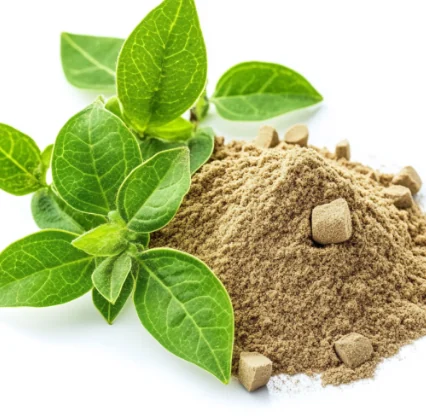
Berberine is a bright-yellow plant alkaloid found in goldenseal, barberry, Oregon grape and tree turmeric. It has a long history in traditional practice, but the reason it earns a place in a modern formula is the volume of clinical data behind it. This article walks through what those trials found, where the effect is strong and where it thins out, and how to set honest expectations before you buy anything — including whether a blood sugar formula such as SugarReset carries berberine at all.
The glucose evidence: a 2022 meta-analysis of 37 trials
The single most useful piece of evidence for berberine is not any one study but a pooled analysis of many. A 2022 meta-analysis published in Frontiers gathered 37 randomised controlled trials covering 3,048 participants with type 2 diabetes. When you combine that many trials, individual quirks — an unusual group of patients, a fluke result, a short study — average out, and what is left is a clearer signal. That analysis is indexed on PubMed as Glucose-lowering effect of berberine on type 2 diabetes: a systematic review and meta-analysis, and its results section states plainly that thirty-seven studies involving 3,048 patients were included.
That signal was a consistent glucose-lowering effect. Berberine reduced fasting plasma glucose and longer-term glycaemic markers, and it did so in two different scenarios: when taken on its own, and when added on top of standard glucose-lowering agents. The second finding is the more interesting one, because it suggests berberine was contributing something beyond what the existing regimen already provided rather than simply overlapping with it.
Two decades of smaller studies sit underneath that meta-analysis, and they point the same direction. That depth is what separates berberine from the rest of the shelf. Cinnamon, gymnema and banaba all have some human data, but none of them has anything approaching 37 trials and 3,000 patients. When people ask which glucose ingredient has the strongest research, the honest answer is berberine, and it is not especially close. The gap is easiest to see against the ingredient it is most often shelved beside, which is why we set out berberine and cinnamon head to head on the evidence.
A caveat belongs right here, though. A meta-analysis of trials in people with type 2 diabetes is exactly that — a study in a clinical population, usually alongside medication and medical supervision. It is not a promise about what will happen for a healthy person taking a supplement, and it is certainly not a claim that berberine treats, cures or prevents any disease. It does not. What the data supports is a role in helping maintain glucose that is already in a healthy range, as part of a wider routine.
Beyond blood sugar: the cholesterol and triglyceride angle
Berberine is often described as a metabolic ingredient rather than a blood-sugar ingredient, and the reason is that its effect does not appear to stop at glucose. Several of the same trials that measured glucose also tracked blood lipids, and they reported small reductions in total cholesterol, LDL cholesterol and triglycerides. That is why you will see berberine turn up in formulas aimed at general metabolic support, not only glucose formulas.
It is worth being precise about the strength of this claim, because it is easy to oversell. The lipid effects are more modest and less consistent than the glucose effects. Some trials show a clear movement; others show very little. Averaged together they lean favourable, but the confidence you can have in "berberine lowers cholesterol" is lower than the confidence you can have in "berberine lowers glucose". The honest framing is that the lipid benefit is a plausible bonus rather than a headline reason to take it. The lipid picture comes mostly from a 2015 Journal of Ethnopharmacology meta-analysis that pooled berberine trials across glucose, lipids and blood pressure — useful, but weaker than the glucose data.
Still, the direction matters. Glucose and lipids are tangled up together in the same metabolic picture, and an ingredient that nudges both is doing something more interesting than one that moves a single number. If you want the deeper breakdown of that dual effect, our companion piece on how berberine supports cholesterol and blood sugar together pulls apart which of those changes is well-supported and which is still tentative.
See how much berberine is actually in the bottle
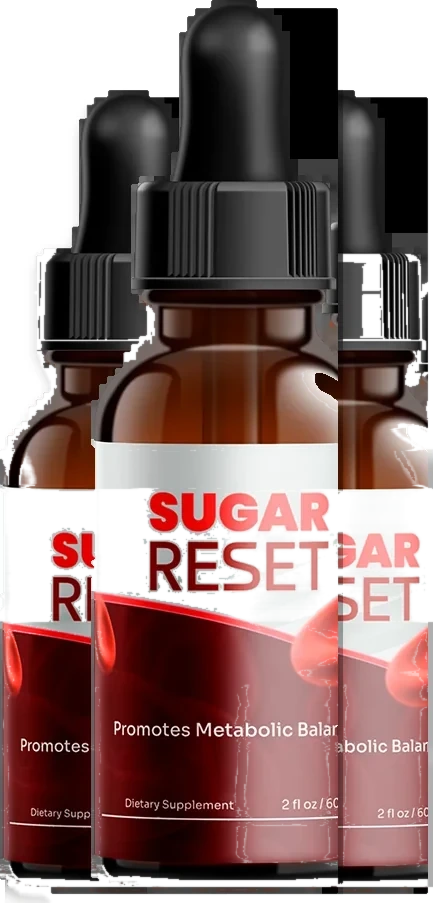
Benefits only follow a real dose, which is why the panel matters more than the front of the box. The SugarReset panel states an amount for chromium picolinate and keeps its botanicals inside a 200 mg proprietary blend, with no berberine listed; it is set out in full, with the current bundle options, on the official page.
Check Availability & OptionsWhy consistent dosing decides whether you see any benefit
Here is the detail that quietly determines whether a person gets the berberine supplement benefits the trials describe, or gets nothing at all: dose and consistency. Berberine has a short half-life, meaning the body clears it fairly quickly. That is precisely why almost every study split the daily amount into two or three doses taken with meals, rather than one large dose in the morning. Steady exposure across the day is how the studied effect was produced.
The amounts used in trials generally sat around 1,000 to 1,500 mg per day, divided up. A product that lists berberine on the front of the box but delivers 100 or 200 mg total is not carrying a studied dose, and the research behind the ingredient does not automatically transfer to it. This is the single most common way a well-chosen ingredient ends up doing nothing: it is present in name, absent in amount. Reading the milligram column is the only way to catch it, and our guide to reading the doses on a blood sugar supplement label shows exactly where labels go quiet. The single most-cited trial, Yin et al. in Metabolism (2008), used 500 mg three times daily, which is where the split-dose convention comes from.
Consistency over time is the other half. The trials measured change over weeks and months, not days. Taking berberine for four days, feeling nothing and stopping is the equivalent of quitting a training programme in the first week. The mechanism is gradual by nature, and the expectation should match it.
Three common objections about berberine, answered
Berberine has a loyal following and a fair number of sceptics, and both camps raise points worth addressing directly rather than glossing over.
"Isn't berberine just a natural version of a prescription drug?" You will see berberine marketed with that line, and it overreaches. Berberine is a botanical compound with its own body of evidence; it is not equivalent to, nor a replacement for, any prescription medication. Anyone taking glucose-lowering medication should treat that comparison as a reason to be cautious, not reassured, because berberine can lower blood sugar and may add to a medication's effect. That is a conversation for a doctor, not a marketing slogan. NCCIH’s overview of diabetes and dietary supplements is explicit that no supplement is a substitute for prescribed diabetes treatment.
"If the effect is only modest, why bother?" This is a fair challenge, and the honest answer is that supplements are not supposed to do dramatic things. A modest, well-evidenced nudge to a marker you care about, stacked on top of diet and activity, is a reasonable thing to want. The problem is not modest effects; the problem is products that promise dramatic ones. Berberine is worth considering precisely because its claims are measured and its evidence is real.
"Doesn't it upset the stomach?" Digestive complaints — cramping, loose stools, constipation for some — are the most commonly reported downside, especially at higher doses taken all at once. This is another reason the split, with-meals dosing pattern exists. It is not universal, and it often settles, but it is honest to name it rather than pretend the ingredient is effect-free.
Where berberine sits next to a blood sugar formula like SugarReset
Berberine rarely travels alone in a modern supplement, and there is a logic to that. It is the anchor — the ingredient with the deepest evidence — and formulators pair it with supporting players like cinnamon, gymnema, banaba and chromium that target the same glucose picture through slightly different routes. The idea is not that six ingredients are six times better than one; it is that a well-chosen combination can approach the problem from more than one angle. We set that pairing out directly in our berberine versus cinnamon comparison.
That said, a combination is only as good as its doses. The risk with any multi-ingredient formula is that the headline ingredient gets crowded out, leaving berberine at a fraction of its studied amount so that a longer, more impressive-looking label can fit. The SugarReset blood sugar formula is a useful worked example of the opposite case: it lists gymnema, African mango, green tea, maca and Panax ginseng inside a 200 mg proprietary blend with no berberine at all, which is exactly the sort of thing worth checking before you assume a blood sugar product contains the ingredient you came for. If you want to see how berberine and cinnamon compare head to head on evidence, our review of the research behind berberine and cinnamon blood sugar supplements lays both out side by side.
None of this changes the core message. Berberine's benefits are real, moderate and gradual. Buy it at a studied dose, take it consistently with meals, give it weeks rather than days, and keep it in its proper place as support alongside the food and movement that do the heavy lifting.
Related reading
Medical note: this article is general reading, not personal medical advice. Berberine can lower blood sugar and may interact with glucose-lowering medication. Speak to a healthcare professional before starting any supplement, especially if you take insulin or other diabetes medication, are pregnant or nursing, or manage a health condition.
Frequently asked questions
What are the proven benefits of berberine?
The best-supported benefit is a reduction in fasting and post-meal blood glucose. A 2022 Frontiers meta-analysis pooling 37 randomised trials in 3,048 people with type 2 diabetes found berberine lowered glucose markers both on its own and when added to standard agents. Alongside that, several of the same trials reported modest improvements in cholesterol and triglycerides. The effects are real but moderate, they build over weeks rather than hours, and they sit on top of diet and activity rather than replacing them.
Does berberine help more than just blood sugar?
The evidence points that way. In the pooled trials, berberine was associated with small reductions in total cholesterol, LDL cholesterol and triglycerides in addition to its glucose effect, which is why it is often described as a metabolic ingredient rather than a single-target one. The lipid changes are modest and less consistent than the glucose findings, so they are best treated as a plausible bonus, not the main reason to take it.
How strong is the research behind berberine?
Berberine has more human trial data than almost any other botanical used for glucose support. The 2022 meta-analysis of 37 randomised controlled trials in over 3,000 patients is the headline, and it sits on top of many smaller studies stretching back two decades. The main limitations are that trials vary in dose and quality, most run for weeks to a few months rather than years, and berberine is usually studied as a single ingredient rather than inside a finished multi-ingredient formula.
Are berberine benefits fast or gradual?
Gradual. Berberine is not a fast-acting compound, and the trials that measured change did so over weeks and months of daily use, not days. Because its half-life is short, it is usually dosed two or three times a day with meals to keep levels steady. If you are expecting an overnight difference you will be disappointed; the honest expectation is a slow, modest shift in markers with consistent daily dosing.
Scientific references
- Frontiers in Pharmacology (2022) — meta-analysis of berberine and glycaemic control in type 2 diabetes
- NIH NCCIH — Diabetes and Dietary Supplements: What You Need To Know
- NIH Office of Dietary Supplements — Dietary Supplements: What You Need to Know
- PubMed 38016844 — Nazari et al., “The Effect of Berberine Supplementation on Glycemic Control and Inflammatory Biomarkers in Metabolic Disorders: An Umbrella Meta-analysis of Randomized Controlled Trials” (Clin Ther, 2024)
- Harvard T.H. Chan School of Public Health — Carbohydrates and Blood Sugar
Read the panel before you assume the dose
SugarReset lists chromium picolinate with a stated amount and keeps its botanicals inside a 200 mg proprietary blend, with no berberine on the panel. To see the current bundle options, the guarantee terms and where to buy from the official store, the details are on the order page.
See SugarReset Options