What Makes the Best Blood Sugar Supplement Brand: Signals You Can Verify
Quick Answer: Which Brand Signals Actually Mean Something?
The best blood sugar supplement brand is the one that lets you verify its claims rather than asking you to trust them, and the strongest single signal is independent third-party testing of the finished batch with the certificate of analysis available on request. Everything else — manufacturing certifications, sourcing stories, guarantee length — describes the process rather than the product, and matters in that order. Marketing signals such as doctor imagery, patent-pending language and star seals carry no verification weight at all.
- Strongest signal: third-party batch testing with an obtainable certificate of analysis.
- Solid baseline: GMP-compliant, registered manufacturing facility and full dose disclosure.
- Ignore: seals a company designed for itself, and any claim to treat a disease.
Why “which brand” is a harder question than “which ingredient”
Ingredient questions have literature behind them. You can look up what happened when researchers gave people a gram of berberine for three months and read the numbers for yourself. Brand questions have no equivalent. There is no journal that publishes trials of companies, no pooled analysis of manufacturers, and no independent body that ranks the top blood sugar supplements by anything other than sales.
What exists instead is a set of proxies — observable things that correlate with a company doing careful work. None of them proves a product performs. All of them are checkable, which already separates them from the great majority of what appears on a sales page. The useful move is to stop asking which brand is best and start asking which brand has made its claims falsifiable.
That reframing matters because the blood-sugar category attracts a particular kind of marketing. The audience is motivated, often worried, and frequently searching for the most effective blood sugar supplement at a moment when they would rather not read footnotes. Companies know this. The signals below are the ones that survive that pressure, ranked roughly by how much they actually tell you.
Third-party testing is the signal that carries the most weight
Independent testing is the only signal on this page that examines the product rather than the company. A sample from a finished batch goes to a laboratory with no commercial stake in the result, and that laboratory reports what it found: ingredient identity, how much of the marker compound is present, and whether contaminants such as heavy metals, pesticide residues or microbial load sit within acceptable limits. The output is a certificate of analysis, usually tied to a specific batch or lot number.
This matters because the gap between label and contents is a documented problem across the botanical supplement category, not a hypothetical one. Independent testing programmes and published analyses have repeatedly found herbal products where the named plant was under-represented, substituted, or accompanied by material nobody declared. A certificate of analysis closes that gap for one batch, which is precisely as much as any test can honestly claim. It is documented in the literature: a 2020 review in Comprehensive Reviews in Food Science and Food Safety surveys the DNA-based methods used to check botanical identity, and why they keep being needed. If you are choosing between products rather than brands, our buyer’s guide to blood sugar management supplements runs the same checks on a panel.
What to look for in practice: a company that publishes certificates, or supplies one when asked, and that ties the certificate to the lot number printed on your bottle. What to be sceptical of: a page that says “third-party tested” with no document behind it, no laboratory named, and no way to request one. The phrase is unregulated. The certificate is not.
| Signal | What it actually verifies | How you check it | Weight |
|---|---|---|---|
| Third-party certificate of analysis | Identity, potency and contaminant limits for a specific batch | Ask for the COA matching your lot number | Highest |
| Full dose disclosure on the panel | That amounts can be compared with published trial doses | Read the supplement facts panel yourself | High |
| GMP-compliant manufacturing | Documented process control, cleaning, record-keeping | Named certifying body, not a self-made graphic | Moderate |
| Registered facility | The site is listed with the regulator and inspectable | Baseline expectation, not a differentiator | Low to moderate |
| Stated extract standardisation | How much marker compound each milligram carries | Look for a percentage or ratio on the label | High |
| Company-designed seals and badges | Nothing. The company made the graphic | Search for the certifying body; if none exists, discount it | None |
Check the signals on a real product page
The fastest way to practise this is on a live page: named ingredients, manufacturing details and guarantee terms all in one place, and an honest look at what the panel does not disclose. The official SugarReset page lays out its formula, bundle options and returns policy in full.
View the Official PageWhere the raw material comes from, and why that moves potency
Botanicals are agricultural products, and agricultural products vary. The concentration of active compounds in a plant shifts with growing region, soil, altitude, rainfall, the point in the season it was harvested, and how it was dried and stored afterwards. Two batches of the same species, both entirely genuine, can differ substantially in how much of the compound of interest they contain.
This is the real reason standardisation exists. When an extract is standardised to a percentage — a stated share of gymnemic acids, of corosolic acid, of berberine — the manufacturer is committing to a consistent amount of the studied compound per gram, regardless of which harvest the raw material came from. It is a quality claim with a number attached, which makes it far more useful than a paragraph about heritage farms. The NIH Office of Dietary Supplements’ background paper on botanical dietary supplements explains why standardisation to a marker compound exists at all. The arithmetic it enables is set out in our comparison of berberine HCl and a standardised extract.
Sourcing stories are pleasant and mostly unverifiable. A photograph of a hillside tells you nothing testable. What is testable is whether incoming raw material is identity-tested on arrival, whether the extract carries a standardisation figure, and whether the finished batch was assayed. If a brand talks at length about its farms and not at all about its assays, that ordering of priorities is itself informative.
Manufacturing standards: what GMP and facility registration do and do not mean
Two phrases appear on nearly every supplement page in this category, and both are routinely over-read. It is worth being precise about them.
“Manufactured in an FDA-registered facility.” Registration means the manufacturing site is on the agency's list and can be inspected. It does not mean the agency evaluated, approved or endorsed the product. Dietary supplements are not approved before sale in the way medicines are; the regulator acts mainly after a problem appears. Registration is table stakes, and a brand presenting it as a distinguishing achievement is stretching. The FDA’s own dietary supplements overview states that it does not approve dietary supplements before they are sold.
“GMP certified.” Good Manufacturing Practice covers process control, sanitation, staff training, record-keeping and batch traceability. It is genuinely meaningful — it is the difference between a controlled production line and a room with a mixer. The question to ask is who certified it. An audit by a recognised independent certifying body is a real credential; a graphic a marketing team produced in-house is not. The word “certified” only means something when a certifier is named.
Neither phrase says anything about whether the formula works. They describe how consistently the company makes whatever it makes. That is worth having, and it is not the same thing.
Manufacturing certifications tell you the product was made carefully. Third-party testing tells you what the product is. Only the second one can be checked against the bottle in your hand.
What the best blood sugar supplement brand does on its own website
You can learn a surprising amount from how a company writes when nobody is forcing it to be careful. A few patterns separate the disciplined from the rest, and none of them requires a laboratory to spot.
It states what the product does not do. Honest supplement pages carry the standard disclaimer and mean it: this is support for normal glucose metabolism alongside diet and activity, not a treatment for any condition. Pages that imply a supplement can reverse, cure or replace medication are making claims that are both unsupported and not allowed.
It gives you a contact route and a real returns process. An address, a working email, stated hours, and a refund policy written in plain terms with a deadline you can actually meet. Guarantee length is less interesting than guarantee mechanics — does the policy require unopened bottles, who pays return shipping, is there a restocking deduction? A generous headline number attached to conditions nobody can satisfy is worth less than a shorter, cleaner one.
It is specific about evidence. Naming an ingredient and describing what trials found is a different act from citing “clinical studies” without saying which. When a page tells you an effect was modest, or that the evidence is mixed, that is a company choosing accuracy over enthusiasm, which is rarer than it should be in a market where every product wants to be the best blood sugar support supplement on the page.
Marketing signals that look like quality and are not
A short list of things that consistently fool people, and why each one is empty.
Doctor imagery. A person in a white coat on a landing page is a stock photograph or a paid endorsement. Neither is a credential attached to the product.
“Patent pending”. Anyone can file an application. Pending means it has not been granted, and even a granted patent covers novelty, not efficacy.
Countdown timers and disappearing stock. Manufactured urgency has no relationship to product quality, and its presence signals that the page is optimised for conversion pressure.
Star ratings with no verifiable source. Numbers that cannot be traced to identifiable purchasers are decoration. This site publishes none, for exactly that reason.
Ingredient counts. “Twenty-four powerful botanicals” is a constraint dressed as a feature. As covered in our guide to reading doses on a supplement label, a capsule holds a fixed volume, and every extra name shrinks the milligrams available to the ones that matter. The formula we cover on this site, SugarReset, is a shorter liquid blend for that reason, and it deserves the same scrutiny as anything else on your shortlist.
What brand signals cannot tell you
It would be dishonest to end a page like this without marking its edges clearly.
None of these signals predicts whether a product will do anything for you. A company can source impeccably, test every batch, manufacture to a high standard, and still sell a formula whose ingredients are present at amounts too low to matter. Quality of execution and quality of formulation are separate questions, and the signals here only address the first. NCCIH makes the same point in its guidance on using dietary supplements wisely.
A certificate of analysis covers one batch. It is meaningful evidence about that lot and weak evidence about the next one, which is why ongoing testing beats a single document from two years ago.
Nothing here substitutes for medical care. Blood sugar management is a clinical matter. If you take glucose-lowering medication, the ingredients in this category — berberine most of all — can interact with it, and that conversation belongs with a clinician rather than a comparison page. No supplement, from any brand, treats or reverses a disease, and any page suggesting otherwise has disqualified itself from the list of brands worth considering.
Medical note: this article is general reading, not personal medical advice. Speak to a healthcare professional before starting any supplement, especially if you take insulin or other glucose-lowering medication, or manage an existing health condition.
Frequently asked questions
What is the single most reliable quality signal for a supplement brand?
Independent third-party testing of the finished batch, with the certificate of analysis available to customers. It is the only signal that checks what is physically in the bottle rather than what the company says about itself. Everything else, including manufacturing certifications and sourcing stories, describes the process that produced the product instead of the product.
Does an FDA-registered facility mean the FDA approved the supplement?
No. Facility registration means the manufacturing site is listed with the agency and can be inspected. The FDA does not approve dietary supplements before they go on sale, and no supplement carries FDA approval in the way a prescription medicine does. Registration is a baseline expectation, not a mark of distinction.
Are third-party certification seals worth paying more for?
Often yes, because certification programmes verify identity, potency and contaminant limits on real samples, and that testing costs money someone has to cover. The caveat is that a seal certifies what was tested and when, so check that the certification covers the product you are buying and not just one item in the range.
How much does where a botanical is grown actually matter?
More than most product pages admit. Growing region, harvest timing, soil and drying method all change how much active compound a plant contains, which is why identical milligram figures on two labels can deliver different amounts of the compound studied. Standardised extracts exist precisely to iron out that variation, which is why a stated standardisation percentage is worth more than an origin story.
Scientific references
- NIH NCCIH — Using Dietary Supplements Wisely
- NIH Office of Dietary Supplements — Botanical Dietary Supplements: Background Information
- NIH Dietary Supplement Label Database
- Mayo Clinic — Dietary supplements: What to know before you buy
- PubMed 33935790 — Ichim et al., “Chemical Authentication of Botanical Ingredients: A Review of Commercial Herbal Products” (Front Pharmacol, 2021)
Apply the checklist to SugarReset
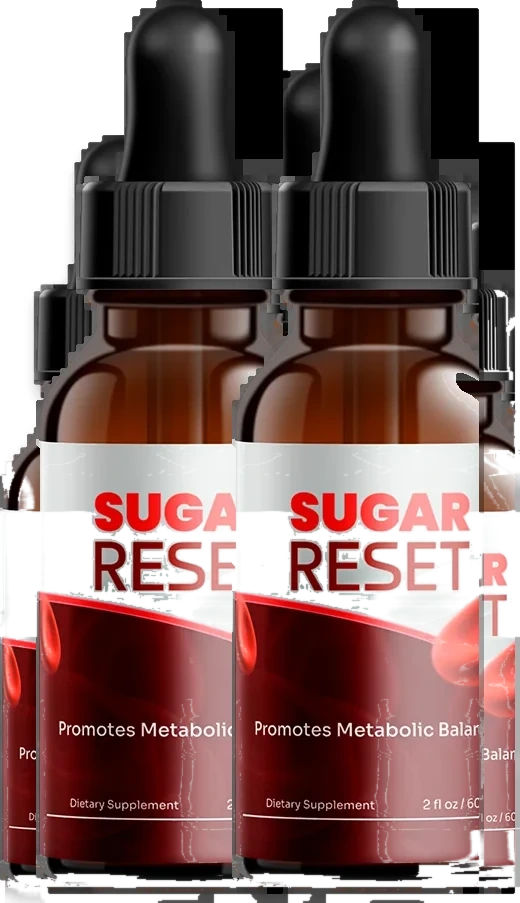
Named botanicals inside a 200 mg proprietary blend, a stated chromium amount, a daily liquid serving, and returns terms written out in full. If you want to see where to buy it directly from the official store, the bundle options are listed there.
See SugarReset Options