Berberine + Inositol for Blood Sugar Support: The Rationale Behind the Stack
Quick Answer: Should you combine berberine and inositol for blood sugar?
Berberine and inositol are paired because they act on insulin from different angles: berberine activates the AMPK energy pathway, while myo-inositol supports insulin signalling inside the cell. Each has its own human research, and the combination is popular for insulin sensitivity and PCOS-related glucose, though evidence for the specific stack is still emerging. Consult a clinician first.
- Berberine's angle: AMPK activation and support for glucose metabolism.
- Inositol's angle: myo-inositol supports insulin signalling; studied in PCOS.
- Reality check: combo evidence is emerging, not a treatment — ask a clinician.
The berberine + inositol combo is one of the fastest-rising stacks in the blood-sugar world, and for a change the popularity has a logic behind it rather than just a viral video. Berberine is the most consistently studied single ingredient for glucose support, and inositol — usually myo-inositol — has its own body of research around insulin signalling and PCOS. Put them together and you get two ingredients that nudge insulin from different directions, which is exactly the kind of pairing that can add up rather than overlap. This article explains that rationale honestly, including where the evidence is strong, where it is still emerging, and where you should slow down and talk to a clinician.
It helps to start with what each ingredient is actually doing, because "supports blood sugar" is a marketing phrase, not a mechanism. Once you can see the two pathways side by side, the reason people combine them stops being a trend and starts being a design decision.
The berberine + inositol rationale, mechanism by mechanism
Berberine's headline mechanism is activation of AMP-activated protein kinase, or AMPK — an enzyme sometimes described as a cellular fuel gauge. When AMPK is switched on, cells behave as though they need to use energy more efficiently: glucose uptake and metabolism improve, and the body leans away from storing fat. This is the same broad pathway that some well-known metabolic interventions work through, which is part of why berberine attracts so much attention. If you want the deeper dive, we lay out the full evidence behind berberine's blood-sugar benefits in a dedicated guide. The AMPK step has been shown directly in laboratory work — Ren et al. in Frontiers in Pharmacology (2020) reported berberine improving glucose and lipid handling in liver cells through AMPK activation. Cell data is a mechanism, not a human outcome.
Inositol plays a different instrument in the same orchestra. Myo-inositol and its relative D-chiro-inositol are involved as secondary messengers inside the insulin signalling cascade — the relay of chemical signals that happens after insulin docks with a cell. In simplified terms, berberine helps set the cell's energy priorities, while inositol helps the insulin message travel cleanly once it arrives. Because these are separate steps, supporting both at once is mechanistically sensible rather than redundant. That non-overlapping logic is the whole reason the stack exists.
None of this means one plus one equals three. It means the two ingredients are unlikely to simply duplicate each other, which is the failure mode of many multi-ingredient blends. Complementary beats redundant, and that is genuinely the strongest argument for the pairing.
Why inositol is the natural partner — and the PCOS connection
Inositol earned its reputation largely through research in polycystic ovary syndrome, a condition in which insulin resistance is a common feature. Because myo-inositol is tied to insulin signalling, it has been studied as a way to support insulin sensitivity in that context, and it is often paired with a small amount of D-chiro-inositol in a ratio designed to mirror the body's own balance. That research base is why inositol, rather than some other cofactor, keeps showing up next to berberine: both ingredients converge on insulin sensitivity, but through different biology. A 2023 systematic review and meta-analysis in Reproductive Biology and Endocrinology pooled the randomised inositol trials in PCOS and judged it effective and well tolerated in that setting.
It is worth being careful with the language here. Support for insulin sensitivity in the context of PCOS-related glucose concerns is not the same as treating PCOS or any disease, and no supplement should be framed that way. The accurate statement is that inositol has been studied for insulin signalling, that this makes it a rational companion to berberine, and that anyone dealing with a diagnosed condition should be working with a clinician rather than self-prescribing a stack from a comparison page.
Prefer complementary ingredients in one formula?
The appeal of a stack is covering more than one mechanism without juggling separate bottles. The official SugarReset page shows exactly which ingredients are combined — chromium picolinate with a stated amount, the botanicals inside a 200 mg proprietary blend — along with its bundle options and full returns policy.
View the Official SugarReset Page
What dose of inositol and berberine the research uses
This is the practical heart of the matter, because a stack only means anything if both ingredients arrive at amounts the studies actually used. The two ingredients live on completely different scales, and confusing them is a common mistake.
Inositol is dosed in grams. Myo-inositol research commonly uses roughly 2 to 4 grams per day, often split into two servings, and PCOS studies frequently combine it with D-chiro-inositol in a ratio near 40 to 1. Because these are gram-level amounts, inositol takes up real space in any formula — you cannot hide a meaningful inositol dose in a tiny capsule alongside a dozen other ingredients.
Berberine is dosed in hundreds of milligrams. The studied range is roughly 900 to 1,500 mg per day, split across meals because a single large dose absorbs poorly and can upset the stomach. Absorption and form matter too, which is why it is worth understanding how berberine HCl compares with a standardised extract for potency before assuming two "berberine" labels are equivalent.
The takeaway for shoppers is blunt: read the panel. A product can print "berberine and inositol" in large type and still deliver a fraction of either studied dose. If the label will not tell you the milligrams and grams, treat that silence as an answer. Our walkthrough of chromium's evidence and effective dose makes the same point about a third common ingredient — disclosure first, marketing second.
| Ingredient | Typical studied dose | How it is usually taken | Main role in the stack |
|---|---|---|---|
| Berberine | ~900–1,500 mg/day | Split across meals | AMPK activation; glucose-metabolism support |
| Myo-inositol | ~2–4 g/day | Often split into two doses | Insulin signalling support |
| D-chiro-inositol (optional) | Small, ~40:1 with myo-inositol | Combined with myo-inositol | Complements myo-inositol in PCOS research |
Addressing the common objections
Three doubts come up again and again about this pairing, and each deserves a straight answer rather than a sales pitch.
"Isn't this just marketing hype stacking two trendy ingredients?" Partly fair. The combination is fashionable, and fashion does drive some of the products. But the mechanistic case is real: berberine and inositol act at different points in insulin biology, so combining them is not the same empty move as blending two ingredients that do the identical thing. The honest position is that the rationale is sound and the dedicated combination trials are still catching up.
"If berberine is so strong, why add inositol at all?" Because berberine's strength is also its limitation — it is demanding to dose, and its main lever is AMPK. Inositol addresses a different step, and it may be especially relevant for people whose concern centres on insulin signalling, such as those with PCOS-related glucose issues. Adding a complementary mechanism is a reasonable way to broaden support without simply increasing an already stomach-unfriendly berberine dose.
"Is the combination proven?" No, not to the standard of each ingredient alone. Berberine and myo-inositol each have their own human trials; the specific stack has fewer dedicated studies. That is why we describe it as an emerging, well-reasoned combination rather than a settled one. For the wider landscape, our evidence-graded comparison of glucose-lowering supplements shows where berberine and inositol sit relative to everything else. What does exist is a comparison rather than a combination: a 2021 network meta-analysis in Reproductive Health ranked metformin, thiazolidinediones, inositol and berberine against each other in women with PCOS, which is not the same as testing the two together.
The strongest argument for the berberine and inositol stack is not that each ingredient is powerful, but that they act on insulin at different steps — so combining them is addition, not repetition.
How a formula like SugarReset uses this thinking
The reason to understand the mechanism is that it changes how you read a label. A credible multi-ingredient product is one that pairs complementary actors at honest doses, rather than piling up a long list of names for the marketing value of the count. That is the design principle a stack is meant to follow, and it is the standard we hold SugarReset to as well. The daily liquid we cover on this site carries neither berberine nor inositol; it is built on chromium picolinate with gymnema, African mango, green tea, maca and Panax ginseng inside a 200 mg proprietary blend, so the individual amounts cannot be compared to the studied ranges above. Whether you buy it or something else, apply the same test — complementary mechanisms, disclosed doses, no disease claims.
A liquid format is also relevant to a berberine-and-inositol discussion for a practical reason: gram-level inositol and multi-hundred-milligram berberine are bulky, and how a product delivers them affects how easy the regimen is to actually follow. The best stack in theory is the one you will still be taking consistently in three months, at the doses that matter.
Safety, interactions and the real limits
For many healthy adults, both ingredients are generally well tolerated. Berberine's most common complaint is digestive upset — cramping, diarrhoea or constipation — usually at the higher end of the dose range, which is why splitting it across meals helps. Inositol is typically gentle, with occasional mild stomach symptoms at larger grams-per-day intakes.
The more important issue is interactions, and it is where berberine drives the caution. Because berberine can lower blood sugar, taking it alongside glucose-lowering medication can push levels down further than intended, and berberine may also affect how the body processes certain other drugs. This is not a reason for alarm, but it is a firm reason to involve a professional before starting — particularly if you are pregnant, nursing, taking any medication, or managing a diagnosed condition. No supplement in this category, alone or stacked, treats, cures or reverses disease, and any product implying otherwise has crossed a line. NCCIH’s page on diabetes and dietary supplements carries the same warning about combining glucose-active supplements with prescribed treatment.
Medical note: this article is general reading, not personal medical advice. Speak to a healthcare professional before starting any supplement, especially if you take insulin or other glucose-lowering medication, are pregnant or nursing, or manage an existing health condition.
Frequently asked questions
Why combine berberine with inositol?
Because they target insulin through complementary mechanisms rather than the same one. Berberine works largely by activating AMPK, an enzyme that influences how cells use glucose and fat, while myo-inositol acts as a secondary messenger in the insulin signalling pathway. Pairing two ingredients that improve insulin response by different routes is the rationale behind the stack, though the combined effect has been studied less than each ingredient alone.
Is berberine plus inositol good for insulin sensitivity?
Both ingredients have individual human research suggesting support for insulin sensitivity, and inositol in particular has been studied in the context of PCOS, where insulin resistance is common. Combining them is a reasonable, mechanism-driven idea, but the specific pairing has fewer dedicated trials than either component, so it is best described as promising rather than proven. Effects, where present, are supportive and gradual, not dramatic.
What dose of inositol is typically used?
Research on myo-inositol commonly uses around 2 to 4 grams per day, frequently split into two doses, and it is often combined with a small amount of D-chiro-inositol in a roughly 40-to-1 ratio in PCOS studies. Doses vary by product and purpose, so treat these as typical study figures rather than a personal recommendation, and confirm the amount on your label matches what you intend to take.
Is the berberine-inositol combo safe?
For many healthy adults both ingredients are generally well tolerated, with berberine most often causing digestive upset at higher doses and inositol occasionally causing mild stomach symptoms. The bigger caution is interactions: berberine can lower blood sugar further alongside diabetes medication and may affect how some drugs are metabolised. Anyone pregnant, nursing, on medication or managing a health condition should speak with a clinician before starting.
Related reading
- Berberine supplement benefits: a blood-sugar guide
- Chromium for blood sugar: the evidence and the effective dose
- Berberine HCl vs standardised extract: potency compared
- Glucose-lowering supplements compared (2026)
Scientific references
- NIH NCCIH — Diabetes and Dietary Supplements
- PubMed 36703143 — Greff et al., “Inositol is an effective and safe treatment in polycystic ovary syndrome: a systematic review and meta-analysis of randomized controlled trials” (Reprod Biol Endocrinol, 2023)
- PubMed 17971514 — Yin et al., “Berberine improves glucose metabolism through induction of glycolysis” (Am J Physiol Endocrinol Metab, 2008)
- PubMed 34407851 — Zhao et al., “Comparative efficacy of oral insulin sensitizers metformin, thiazolidinediones, inositol, and berberine in improving endocrine and metabolic profiles in women with PCOS: a network meta-analysis” (Reprod Health, 2021)
- NIH Office of Dietary Supplements — Fact sheet directory
- Mayo Clinic — Dietary supplements: What to know before you buy
See how SugarReset combines its ingredients
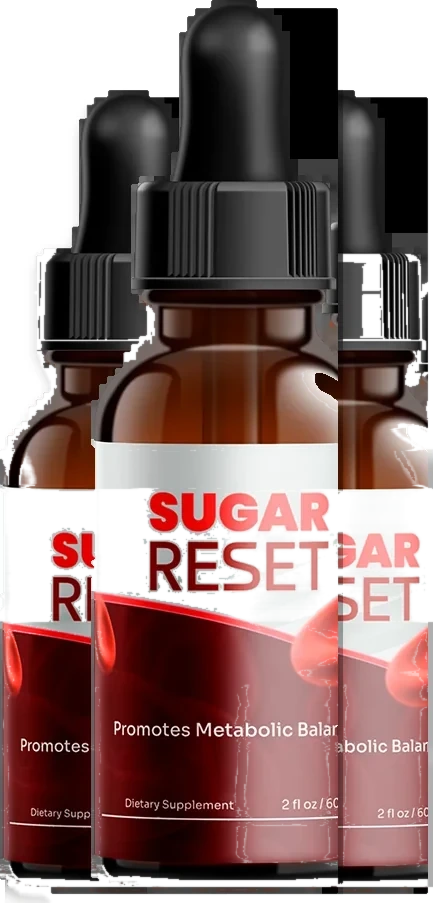
A daily liquid rather than a fistful of capsules, with chromium picolinate stated on the panel, the botanicals inside a 200 mg proprietary blend, and returns terms written out in full. To view the bundle options and buy directly from the official store, they are listed there.
See SugarReset Options